


Self-organization refers to the collective resonance phenomenon where individual elements spontaneously arrange into ordered patterns through internal interactions. However, chaotic multimode synchronization in traditional semiconductor laser cavities limits their performance in practical applications. Topological photonics, originating from the theory of topological states in condensed matter physics, employs "topological invariants" to describe the band structure of photonic crystals. This approach offers a novel paradigm for constructing robust, unidirectional, and highly localized photonic states.
Recently, a team led by Academician Zheng Wanhua from the Institute of Semiconductors, Chinese Academy of Sciences, published groundbreaking work in Laser & Photonics Reviews. They successfully observed self-organized laser emission based on delocalized topological edge states, achieving large-scale high-coherence laser output. This breakthrough precisely resolves the core contradiction in traditional lasers-the mutual constraint between high power and high coherence. -a trade-off often imposed by physical constraints in conventional devices. Leveraging the self-organizing synchronization mechanism aided by delocalized topological edge states and non-Hermitian modulation, this research preserves both the high coherence advantage conferred by topological protection and self-organization. Simultaneously, it expands the energy distribution through delocalization, ultimately forming an innovative technical solution that synergistically optimizes "power-coherence."

Figure 1 Schematic of self-organized topological laser output and fundamental principles
Starting from the classical one-dimensional topological Su-Schrieffer-Heeger (SSH) model, the research team leveraged the structure's chiral symmetry protection to modulate coupling strengths within the SSH lattice, achieving delocalized distribution of topological edge states in real space. Simultaneously, through non-Hermitian modulation based on patterned electrode structures, the delocalized topological edge states maintain dominance over disordered backgrounds, exhibiting unique self-organizing patterns. Compared to photonic crystal lasers of equivalent scale, this topological laser exhibits higher spatial coherence, resulting in lower thresholds, more stable spatial output modes, and higher speckle contrast. Furthermore, it expands the spatial distribution scale of topological edge states and incorporates phase shift couplers to enhance output optical power density.

Figure 2 Schematic design of delocalized topological edge states
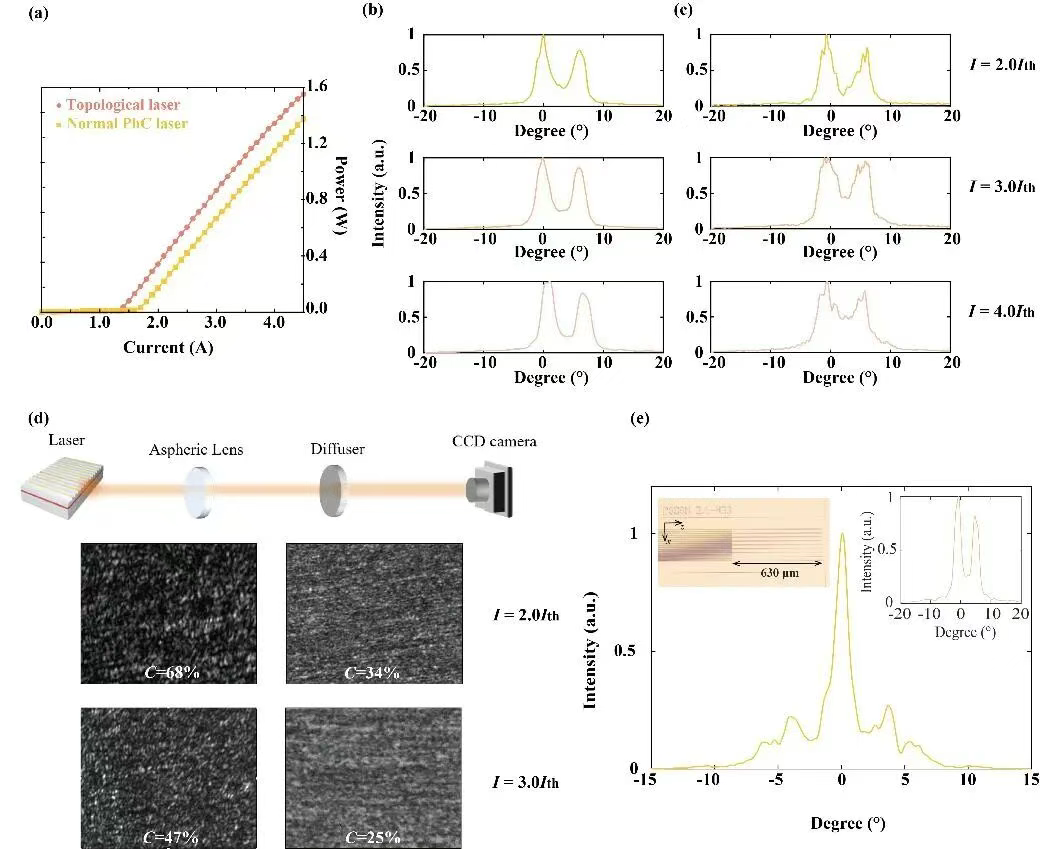
Figure 3 Comparison of topological laser with photonic crystal experiments at equivalent scale
This approach not only diversifies the technical pathways for topological lasers but also aligns with the trend of topological photonics permeating integrated photonic chips and high-performance optical emitters, further advancing the practical application of topological physics in photonics. The findings, titled "Self-organized lasing of delocalized state enabled by non-Hermitian manipulation and chiral symmetry," were published in Laser & Photonics Reviews (DOI: 10.1002/lpor.202501772). Postdoctoral researcher Chen Jingxuan and doctoral candidate Tang Chenyan from the Institute of Semiconductors, Chinese Academy of Sciences, are the co-first authors. Young researcher Wang Mingjin and Academician Zheng Wanhua are the co-corresponding authors.


