


During this parade, the PLA showcased three types of laser weapons: a ship-based lasersystem marked "LY-1" appeared in the naval air defense weapons contingent, which included the HHQ-9C, HQ-16C, HQ-10A, and laser weapons. According to publicly available information, the laser weapon, when operating in coordination with the three aforementioned air defensesystems, can form a stronger and more reliable integrated defense capability. It also establishes a three-tier defense zone-long-range, medium-range, and close-range-for our naval combat vessels' regional operations.

The LY-1 shipborne laserdisplayed at the September 3rd parade. The other two systems are smaller in size, mounted on small high-mobility vehicles and trucks, designed to provide protection for ground forces. The anti-drone contingent featured 17 vehicles across five types, including anti-drone artillery systems, high-energy laser weapons, and high-power microwave weapons. These form a cohesive system capable of intercepting drones and loitering munitions through both non-lethal incapacitation and lethal destruction, creating a formidable "iron triangle" against unmanned threats.
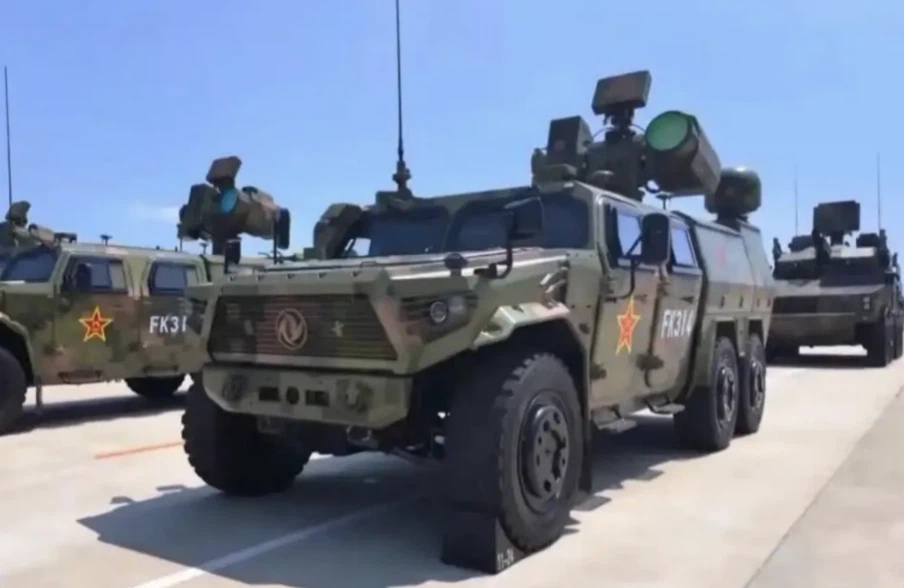
Laser weapons showcased in the anti-drone formation In fact, prior to the parade, official briefings had already revealed that directed-energy weapons would be featured, further heightening public anticipation. Directed-energy weapons operate on the core principle of concentrating energy into a focused beam directed at a target, either destroying it outright or rendering it inoperable. This category primarily includes laser weapons, high-power microwave weapons, and particle beam weapons. Unlike conventional weapons that rely on kinetic or chemical energy, directed-energy weapons destroy targets by focusing energy. They can transmit energy at or near the speed of light, achieving a "detect-and-destroy" combat effect.


