


The precision vision laser cutting control system is a high-precision control system that combines visual recognition technology, high-precision motion control, and laser energy control. Its working principle is that camera visual recognition obtains information in real time. The system makes processing feedback based on the obtained information and automatically completes the processing. Laser processing after adding a visual recognition system can significantly improve accuracy, efficiency and automation, and is currently one of the mainstream choices for large-scale precision processing.
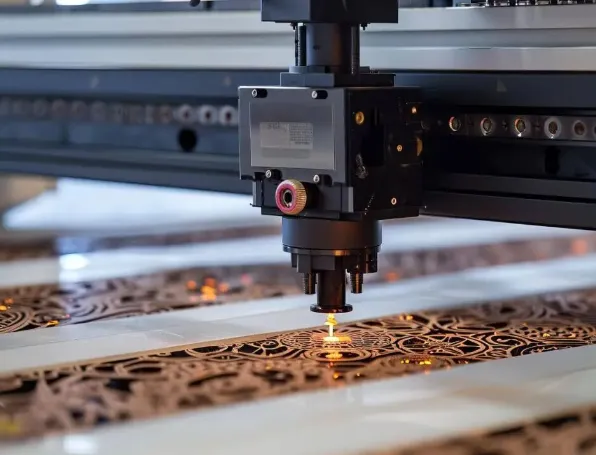
The essence of the precision vision laser cutting control system is a real-time closed-loop system of visual positioning and motion control. It dynamically captures the position/morphology information of the processing object through the vision module, corrects the motion trajectory and laser parameters in real time, and ensures that the cutting accuracy matches the actual state of the material.
The core feature of the precision vision laser cutting control system lies in its many features, which are adapted to the high-precision, high-flexibility, and high-stability requirements of precision processing:
1. High-precision positioning: The system pre-processes images through image processing technology, such as denoising, enhancement, edge detection and feature extraction. The visual system provides real-time feedback during processing. The algorithm compensates various errors caused by positioning errors, processing deformation, equipment drift and other reasons for materials based on the captured image information.
2. Production flexibility: Traditional precision cutting requires customized tooling fixtures to fix materials. Visual guidance can directly identify material characteristics, eliminating the need for material transportation and placement steps. When changing types, only the visual template needs to be updated, and the time is shortened from hours to minutes, which is more suitable for the current market environment with diverse and rapidly changing needs.
3. Improve processing efficiency: With the visual recognition system, the production line can cooperate with the feeding device to achieve automated production, saving time on manual positioning and tooling debugging, and the visual system can identify problems such as material deformation in advance before processing, avoiding ineffective processing and saving time on reprocessing scrap products.
4. Non-contact processing: The visual laser control system inherits the foundation of laser processing of non-contact and small heat-affected zone, and combines it with the precise positioning of visual guidance to further protect fragile and easily deformed materials. For example, in printed circuit processing, the laser focus is guided by vision to accurately align the processing area to avoid mistaken laser irradiation. The combination of vision and laser transforms laser processing from a rigid and programmed tool into an intelligent, flexible and adaptive manufacturing system. It not only solves the accuracy and efficiency bottlenecks in traditional processing, but more importantly, it opens up a large number of new application fields and is one of the core technologies of intelligent manufacturing.
The combination of vision and laser transforms laser processing from a rigid and programmed tool into an intelligent, flexible and adaptive manufacturing system. It not only solves the accuracy and efficiency bottlenecks in traditional processing, but more importantly, it opens up a large number of new application fields and is one of the core technologies of intelligent manufacturing.


