


Global green industrial transformation continues to accelerate in 2026, greatly reshaping the pattern of traditional industrial cleaning. Fixed water-cooled laser cleaning machines gradually lose market share, while integrated trolley pulsed laser cleaning units become the preferred equipment for on-site maintenance across industries. Industry analysts predict that the global laser cleaning equipment market size will hit over 890 million US dollars in 2026, and portable trolley machines contribute more than 40% of new global orders.
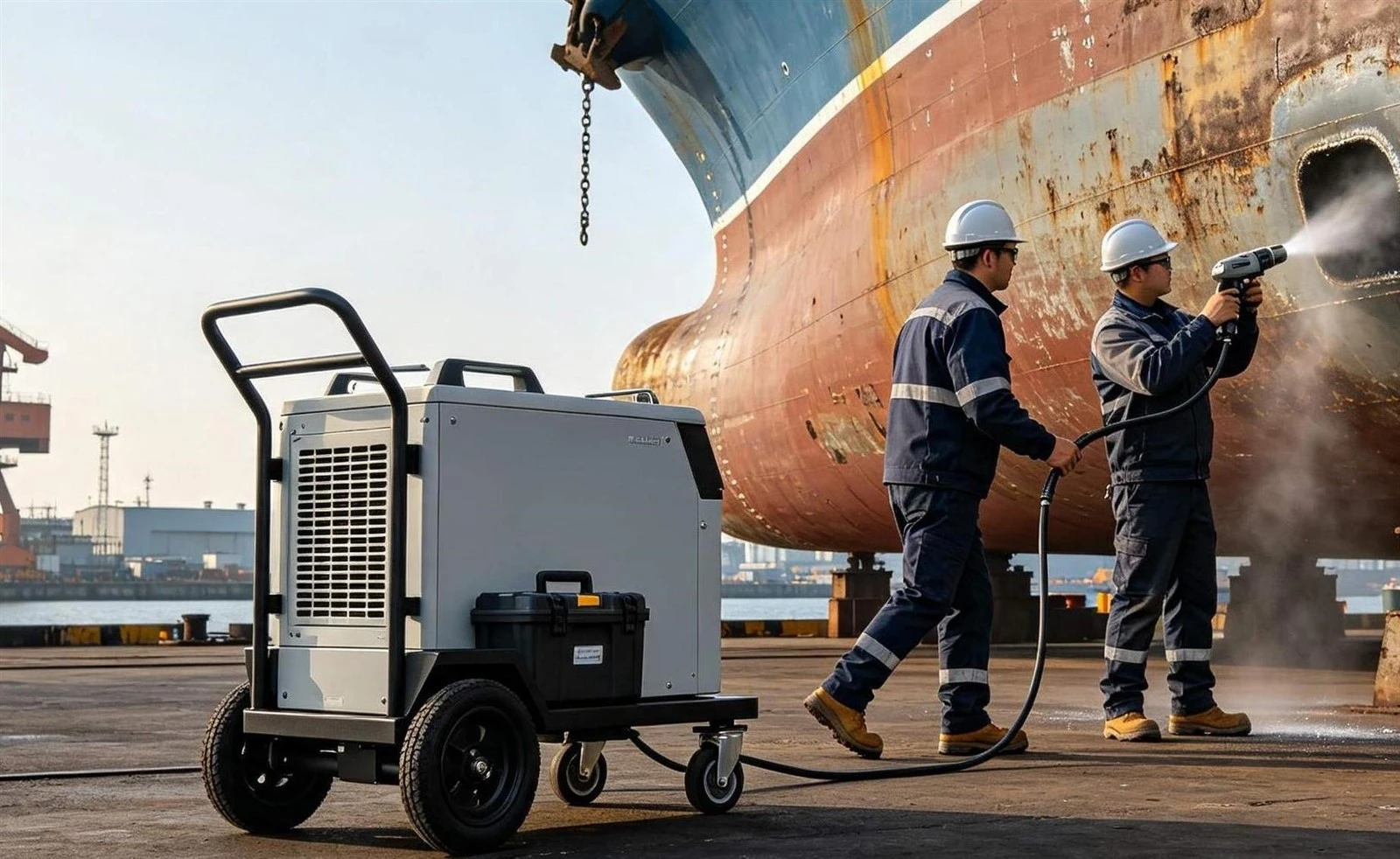
The popularization of trolley laser cleaners benefits from the miniaturization iteration of MOPA pulsed fiber lasers. The new generation air-cooled laser source reduces the overall machine volume by 40% compared with early imported devices. Equipped with universal casters and quick-assembly structure, the machine can be put into use right after unpacking, without complicated factory infrastructure reconstruction. Engineers can directly carry out rust removal, paint stripping and oxide cleaning on large ship hulls, heavy injection molds and outdoor pipeline steel without disassembling and transporting bulky workpieces.
Adopting nanosecond cold cleaning technology, pulsed laser controls the heat-affected zone to the minimum range. Laser energy selectively vaporizes rust, old paint, carbon deposits and residual glue without scratching or deforming the base material. The graded power options of 100W, 200W and 300W perfectly match different working scenarios: low power for delicate antique wood paint removal and precision battery component pretreatment; medium and high power for large-area factory steel derusting and mold deep cleaning.

In terms of policy, EU industrial environmental directives have further restricted high-pollution acid washing and open sandblasting operations, pushing small and medium manufacturers to upgrade surface treatment processes. Meanwhile, AI vision detection modules are deployed on mid-range trolley laser cleaners. The system can identify surface contamination conditions in real time and automatically match optimal laser parameters, cutting process debugging time from hours to several minutes and lowering the operation threshold for global factory workers.
In the overseas market, CE-certified trolley pulsed laser cleaning machines gain growing orders in European infrastructure maintenance and furniture antique restoration sectors. Industry insiders point out that mobility, low thermal damage and intelligent parameter adaptation will be the three core development directions of civil laser cleaning devices in the next three years.


