


In recent years, the progress of domestic fiber laser is very obvious, formed a high power, high brightness, high integration and other technology routes, in the material processing applications continue to explore new market opportunities, become an important driving force for industrial development traction. On the other hand, as non-metallic materials in the new energy, biomedical, new display and other emerging industries more and more widely used, laser processing to replace the traditional process has also become an important direction for the development of the industry.
What is so special about 2μm lasers?
From the principle point of view, the 2μm band is in the safety band of the human eye, with good absorption spectra for NO, H2O, CO2, etc., which can be applied to LIDAR, space communications, biomedical, material processing and other directions.
In the field of material processing, metal processing is estimated to occupy more than 85% of the industrial laser market, while non-metallic processing currently occupies less than 15% of the share. At present, Europe, the United States and Japan in non-metallic processing process development and exploration in the leading position. Due to the process is not mature enough, coupled with the need for different materials, applicable to different power, wavelength of the laser, the domestic in the field of non-metallic processing is not much attention. In recent years, under the background of energy saving and emission reduction, the application of non-metallic materials has become more and more popular.
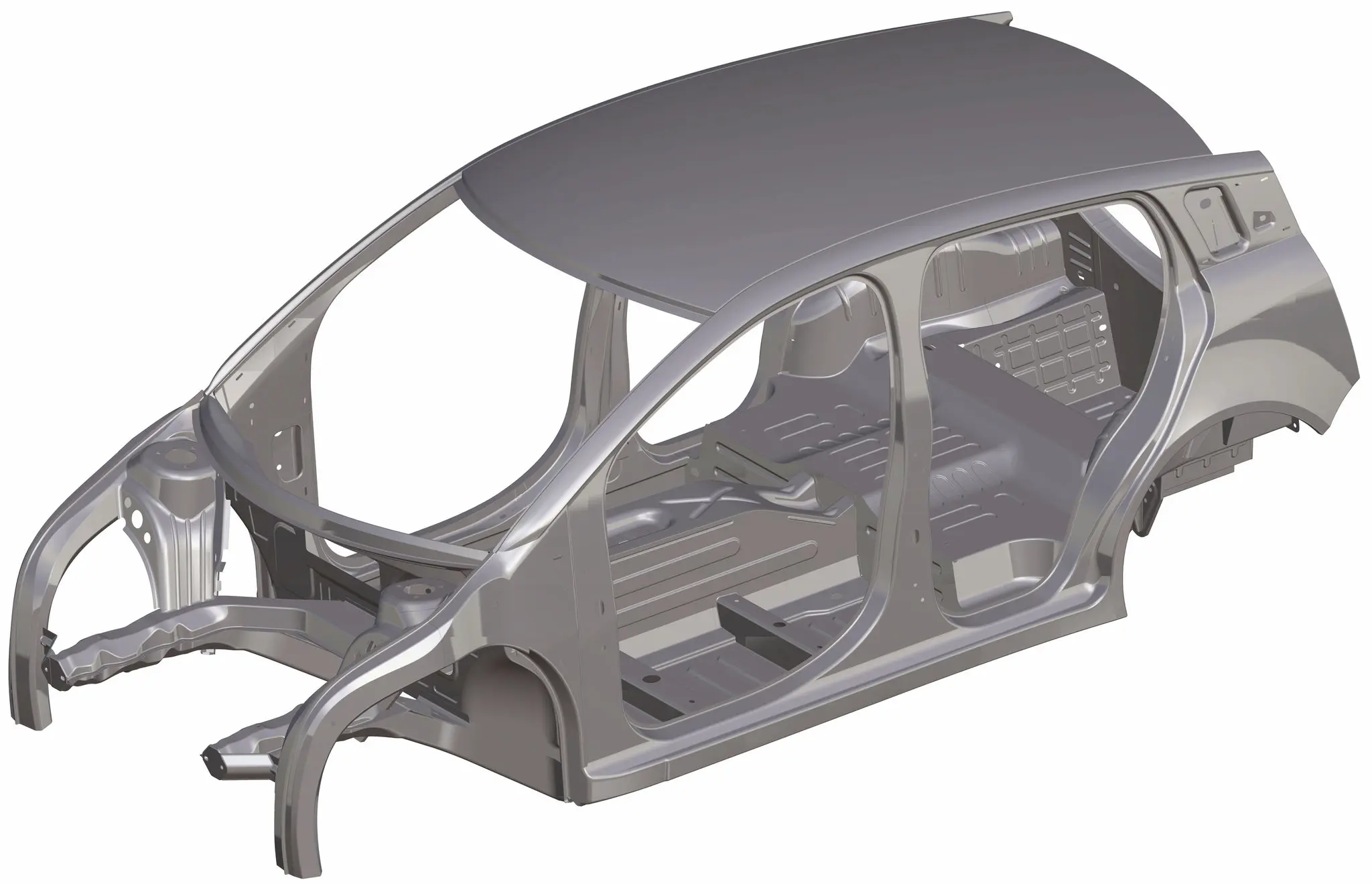
Taking the automotive industry as an example, "replacing steel with plastic" is becoming an important initiative for lightweighting, and the amount of plastics used in both exterior and interior decorative parts is increasing. With the continuous improvement of hardness, strength and tensile properties of engineering plastics, plastic windows, doors, frames and even more critical automotive parts are using plastic to replace steel. And this will further drive the popularization of laser processing applications for non-metallic materials.
From the waveband point of view, 2μm laser is very attractive in material processing, especially plastic processing, most of the similar plastic materials in the vicinity of 2μm has a strong enough absorption, so you can directly material processing, with the absorbed energy can be cut, fusion and marking. Based on the development of non-metallic material processing needs, 2μm lasers have become a hot spot for research in the field of fiber lasers in the past decade.
Outside the metal processing, the new development direction of fiber laser
In order to further meet the application needs, the "invisible champion" in the field of domestic fiber lasers, Jiepute has launched a new generation of 2μm CW thulium-doped fiber lasers, with an average output power of 200W, a central wavelength of 1940nm, water-cooled heat dissipation and drawer-type design, with high efficiency of electro-optical conversion, low energy consumption, free of regulation and maintenance, flexible fiber conduction output, and high efficiency of electro-optical conversion. It has many advantages such as high electro-optical conversion efficiency, low energy consumption, no adjustment and maintenance, fiber flexible conduction output, compact structure, small volume, light weight, easy to handle and transport, etc., which provides an ideal light source for biomedical, plastics cutting and welding, environmental monitoring and other applications.
Laser welding of plastics opens up new application markets
Laser welding of plastics is also known as laser transmission welding, the laser produces a beam of light focused on the area to be welded, that is, the laser beam through the upper part, in the two parts of the contact surface is absorbed by the other part of the formation of the heat effect zone (weld). The plastic in the heat-activated zone is melted, and the plastic macromolecules in the hot-melt state diffuse into each other under the welding pressure, generating Van der Waals forces, which then tightly connect the two parts together.
Compared with the traditional welding process such as gluing, hot melt welding, ultrasonic welding, vibration welding, etc., laser plastic welding has the advantages of no physical contact, good smooth and clean welding effect, and high degree of automation. As PP, PC, PMMA and other thermoplastics for the 2μm band light absorption rate relative to the visible light and near-infrared wavelengths have significantly improved, the use of 2μm thulium-doped fiber laser welding is more competitive.

Penetration rate of different materials to different wavelengths of laser light.
In automotive applications, PC materials account for about 50% of the plastic materials in headlights, which are generally used for automotive tail light shells and trim boards, while PP materials account for about 30% of the plastic materials in headlights, which are usually used for the rear cover of the tail light, trim boards and harness guides, and the shells and rear cover of the headlights. PMMA has excellent optical properties, transmittance of up to 90% -92%, refractive index of 1.49, high surface hardness and excellent overall performance, mainly used as optical transparent products, taillights, external light guide mirror and interior ambient light light guide material.
The welding test of PP, PC and PMMA materials with Jabil's 2μm CW thulium-doped fiber laser can achieve uniform and consistent weld seams, which are flat and smooth, without porosity and overburning. In the PC material welding, the shear force exceeded 1300N in 1.5mm welding width, and the base material was fractured, while in the PP material welding, the shear force exceeded 1000N in 2mm welding width and the base material was fractured, and in the PMMA material welding, the shear force exceeded 800N in 1.3mm welding width and the base material was fractured.
In heterogeneous material welding, Jabil's 2μm CW thulium-doped fiber laser still performs very well. After the test, PC through + PMMA black sample plate test weld path smooth and consistent, can get effective welding effect; PMMA through + PC black sample plate test weld path appeared slight fluctuation, tensile force test base material fracture, can get effective welding effect.
Laser plastic welding is now mainly used in lamps, automotive instrument panels and auto parts and other plastic parts. According to the China Association of Automobile Manufacturers data, January to September, China's automobile production and sales totaled 2107.5 million units and 2106.9 million units, an increase of 7.3% and 8.2%, respectively, to maintain a stable growth trend. With the rapid rise of China's new energy vehicles, the demand for plastics processing more and more exuberant. As a new welding process, 2μm fiber laser will be further popularized.
In addition to plastic welding, 2μm laser has a big use
Biomedical analyzers are usually required to be sterile, no chemical substances can be involved, and so on. Laser welding as a non-contact welding method, especially suitable for the production of such products. In the field of medical devices, laser welding of plastics is mainly used in injection systems, medical electronics, various artificial grafts and stoma products, and so on.
In addition to plastics welding, the 2μm laser has a suitable absorption peak in water, which is particularly suitable for medical applications, allowing the laser to penetrate within the skin to a depth of no more than a few hundred μm. Biological tissues, the main component of which is water, have a high absorption of the 2μm laser to achieve a very small area of heating, which allows precision cutting and rapid hemostasis, and is the best choice for many surgical procedures.
The size of only 50μm micro-action area can keep the stratum corneum scaffold unchanged, realize the epidermis of the newborn and reconstruction, short-term can be repaired; laser precise action dermis, can stimulate the skin micro-invasive mechanism, complete collagen regeneration and remodeling; and at the same time need to microseconds dynamic pulse time, kilohertz high-speed step response, experience fast and comfortable, these are the advantages of the 2μm laser!
According to the research organization Allied Market Research market research report, the global laser medical market reached 5.116 billion U.S. dollars in 2016, and is expected to increase to 12.586 billion U.S. dollars in 2023, with a CAGR of about 13.6%. China Medical Device Industry Association laser medical market research shows that most of the major hospitals in China have now established laser medical centers. With the continuous breakthroughs in key technologies, China's laser medical industry is expected to usher in a new explosive period. As an ideal light source, the 2μm laser will also make its mark!
Summary
Compared with metal processing, the processing of non-metallic materials, such as plastics, requires a higher quality of light source and process. Jabil has been in the laser field for many years, and owns pulsed, continuous, solid-state and ultra-fast laser technologies as well as core automation technologies. 2μm CW thulium-doped fiber laser will help open up the market for new laser applications, and provide the industry chain with a more competitive light source!


