

Speaking of additive manufacturing, some people may not have heard of it, but when it comes to its other name: 3D printing, then no one knows.
In fact, the name "additive manufacturing" better describes the nature of this processing method. From ancient times to the present, in order to realize the purpose of "processing primitive materials into the shapes we need", human beings can be said to have taken great pains. From the Stone Age, chipping wood into spears, chopping stone into axes, to later turning, milling, drilling, chamfering, to electrochemical, chemical, high temperature processing, although the process has progressed, but the idea is still the same, that is, through a variety of ways, the processing of materials as a whole of a certain portion of the stripping or decomposition.
The reason why additive manufacturing is called epoch-making technology is that it is more like the process of "building blocks", using powdered materials as raw materials, through the way of printing layer by layer to construct the object we need. If traditional processing technology is "subtraction", then additive manufacturing can be said to be "addition". One is "from something to nothing" and the other is "from nothing to something", which is a revolutionary change in industrial production thinking.
The flexibility and versatility of lasers and the high degree of freedom of additive manufacturing can be said to be a match made in heaven. Selective Laser Melting Deposition (Selective Laser Melting Deposition, SLM) process, the laser can become a high-power, high-quality heat source for additive manufacturing, whether it is metal, plastics, ceramics and other materials, can be melted by the laser and layer-by-layer stacking molding, and ultimately the formation of the desired 3D structure. The other light-curing molding technology (Stereo lithography Apparatus, SLA), is through the ultraviolet light or laser beam will be liquid photosensitive resin irradiation curing molding. From point to line and from line to surface, the desired three-dimensional structure is formed.
Laser Additive Manufacturing parts with fine structure and excellent performance are commonly used in aerospace, automotive marine, medical and health care and other industries that require high precision and performance of products. This is due to the following advantages of laser additive manufacturing over traditional processing modes:
01 Effect precision
As additive manufacturing is built by stacking layer by layer, you can design the required geometry in the software in advance. When processing, the idea of "subtraction" for the detailed structure of the workpiece, or the structure of the cavity may not be able to help (although there are now also laser internal engraving technology, but usually only applies to transparent materials, there are limitations). But for additive manufacturing, even the finest structure can be started from the end of the "sand into a tower", to achieve the processing effect.
02 Can be customized and generalized at the same time
Additive manufacturing technology itself is highly flexible, and can be customized to meet specific needs. For example, in the medical scene, dental patients need to customize a denture, general products can not be perfectly adapted to the case can be customized to make related products. For large-scale equipment, Northwestern Polytechnical University has also used the laser additive manufacturing process to produce TC4 alloy wing ribs of more than 3 meters in length for the COMAC C919. Additive manufacturing data is assisted by software that allows for perfect replication of an object's geometry, size and structure under controlled processing conditions.
03 High material utilization
Additive manufacturing is truly "lossless processing". In the traditional sense of processing, the process of "subtraction" means that cutting, turning and engraving will inevitably produce a certain amount of waste. Additive manufacturing technology directly on-demand processing materials, theoretically can realize how much material is needed to prepare how much, reducing the generation of waste. Although the current cost of additive processing can not be ignored, but "non-destructive processing" will be the future development trend.
They say laser additive manufacturing is good, in the end, where is good?
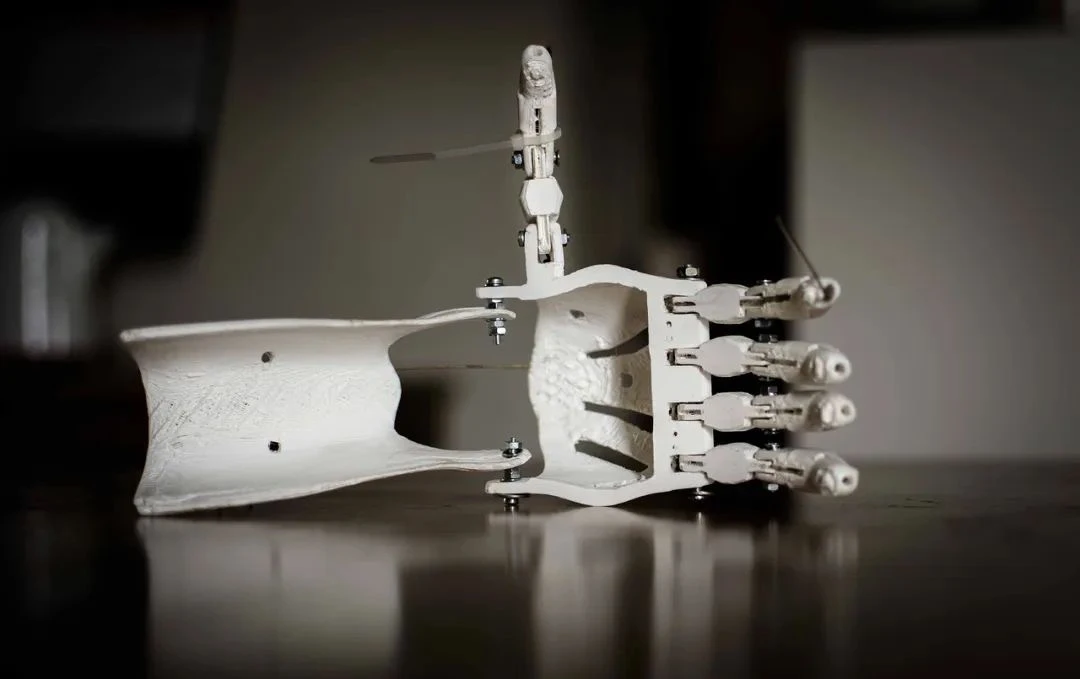
In 2022, the use of additive manufacturing proportion of the top three industries, respectively, aerospace, medical, automotive industry. As you can see, as far as cost is concerned, current additive manufacturing still has some limitations that make it unsuitable for promotion in industries that don't have high enough profit margins. Instead of a new processing method, additive manufacturing provides a kind of "thinking" with extended value for the manufacturing industry. The perfect integration of laser technology and additive processing will not only be limited to the current SLM, SLA and other processing techniques, but also has the potential to open up more process modes on the road of "addition".

Nov 09, 2023
Leave a message
Advantages Of Laser Additive Manufacturing
Send Inquiry


