


Glass is an industrial material that has been developed for thousands of years. Currently, glass has been used in many industries of the national economy, such as the automotive industry, medical, display, electronic products, etc., from small optical filters of a few microns, glass substrates for flat panel displays of notebook computers, to large-sized glass panels used in large-scale manufacturing fields such as the automotive industry or construction. There are many types of glass, the common soda lime glass, also known as alkaline glass, is mainly used in the automotive industry, construction and household appliances, with a general thickness of 1.6 ~ 110mm. 1mm or less than 1mm thick glass called borosilicate glass or non-alkaline glass, is mainly used in the field of flat panel displays and electronic products.
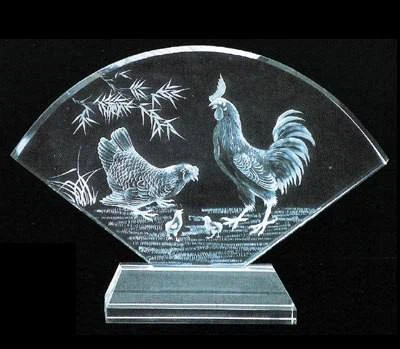
The tradition of glass is a more transparent solid material, forming a continuous network structure when molten, gradually increasing viscosity and hardening during cooling without crystallization of silicate non-metallic materials. The distinctive feature of glass is its hard and brittle nature, which makes processing very difficult. Today, the quality of glass products is increasingly demanding, and more precise and detailed processing results must be achieved. The traditional method of glass processing is mechanical knife scribing. However, mechanical knife scribing is inefficient, ineffective, fragile, easily dulled and broken to replace. It is difficult to achieve no microcrack and edge quality requirements, so the an urgent need for technological innovation in glass cutting. At present, the industry has a new method of glass processing.
As technology advances, laser micromachining can perform more and more functions, such as precision drilling, fine cutting, selective material removal, etc., and more new applications and concepts are being proposed, practised and introduced into industrial production. The laser is the ideal tool for micro-precision machining of all types of materials, it has no direct force with the workpiece, it is not easy to damage the product, it is fast and easy to import CAD drawings directly, for some applications, it is unparalleled high efficiency by traditional methods (such as intensive drilling, etc.), no emissions and waste, environmental protection, etc.
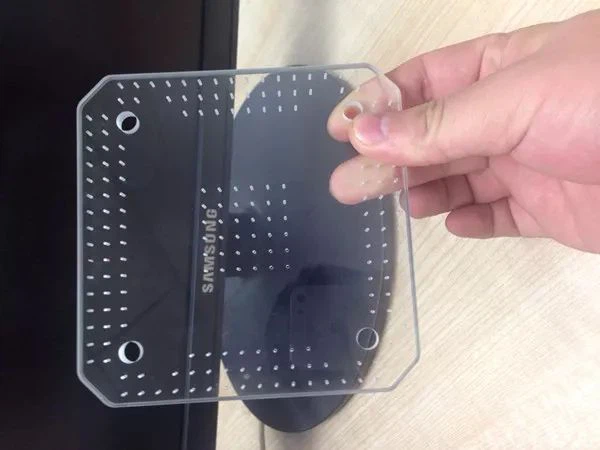
Laser cutting is the use of a focused high-power density laser beam to irradiate the workpiece, so that the irradiated material quickly melts, vaporizes, ablates or reaches the ignition point, while blowing away the molten material with the help of a high-speed airflow coaxial to the beam, thus realizing the cutting of the workpiece. Laser cutting is one of the thermal cutting methods. There is no contact between the laser There is no need to change the "tool" to process different shaped parts, only the output parameters of the laser need to be changed. The laser cutting process is low noise, low vibration and no pollution.
The implementation of laser glass cutting currently applies two methods: one is the melt cutting method, the use of glass at a softening temperature with good plasticity and ductility, with focused CO2 laser or UV laser irradiation to the softened glass surface, the laser has a high energy density will cause the glass to melt, and then blow away the molten glass with airflow, producing grooves, so as to achieve the melt cutting of glass. Second, is the crack control method, which is a commonly used laser cutting method. 1, laser heating of the glass surface, the higher energy will cause a sharp increase in the temperature of the area, the surface produces large compressive stress, but this compressive stress will not cause the glass to rupture; 2, sharp cooling of the area, generally using cooling gas or coolant, the sharp cooling will cause the glass surface to produce a large temperature gradient and a large This tensile stress will cause the glass surface to begin to break along the direction of the predetermined scribe line to achieve the cutting of the glass.
Nowadays, CO2 lasers are generally chosen for the cutting glass processing process. The factors to consider when choosing a suitable laser include wavelength, output power, beam pattern, flexibility, cost, reliability and whether it is conducive to system integration, etc. The laser wavelength emitted by the CO2 laser is 10.6μm, and the glass can strongly absorb the laser at a wavelength of 10.6μm, and almost all the laser energy is absorbed by the 15μm absorption layer on the glass surface, so the glass laser cutting system Almost all laser energy is absorbed by the 15μm absorption layer on the glass surface, so glass laser cutting systems are almost always equipped with CO2 lasers.
Glass laser cutting is an innovative technology that has been used in the electronics, automotive, and construction industries (displays, screens of cell phone tablets, car windows, windshields, etc.), while the technology can be used to process other fragile materials, such as ceramic materials for manufacturing wafers in the electronics industry, other common materials in the semiconductor industry, etc. are expected to become the object of laser cutting processing. In the general environment of energy saving and emission reduction requirements, the next potential application industry will be the solar industry. It is believed that laser-cutting technology will become more and more mature, and the development of laser-cutting glass technology will be better and better.


